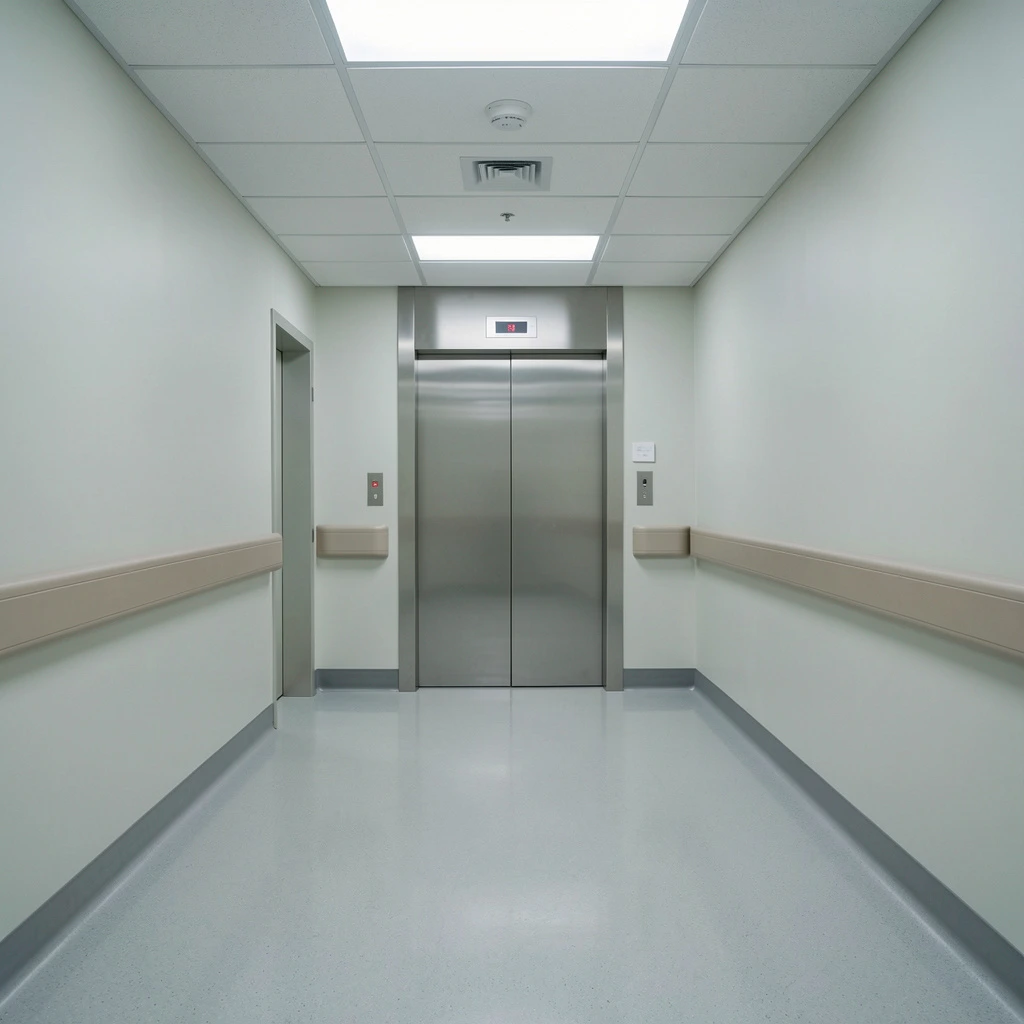
Best Elevators for Hospitals in Bangalore: Safety, Speed & Reliability
The best elevators for hospitals in Bangalore are Automatic Gearless MRL (Machine-Room-Less) Stretcher Lifts that prioritize a minimum payload capacity of 1000kg to 1500kg. In a high-stakes clinical environment, the ideal medical lift must feature VVVF Drive technology for jerk-free travel, micro-leveling precision to ensure stretchers don’t jolt during entry, and strict compliance with the Karnataka Lift Act 2026.
For healthcare facilities in hubs like Whitefield, Bannerghatta Road, and Old Airport Road, Aaron Elevators provides specialized medical-grade vertical transportation. Our Gearless MRL systems are engineered for 24/7 duty cycles, ensuring that patient transfer is never delayed by mechanical downtime.
Table of Contents
- The Critical Role of Medical Vertical Transportation
- Defining a True Hospital Elevator
- Technical Specifications: Speed, Capacity & Dimensions
- The Gearless MRL Advantage for Sterile Environments
- Karnataka Lift Act 2026: Mandatory Hospital Compliance
- Advanced Safety: Protecting Patients and Equipment
- Hospital vs. Residential Lifts
- Frequently Asked Questions
- Why Aaron Elevators is Bangalore’s Trusted Healthcare Partner
The Critical Role of Medical Vertical Transportation
In a city like Bangalore, which serves as a global healthcare destination, hospital infrastructure must meet world-class standards. An elevator in a hospital is not merely a convenience; it is a life-saving tool. Whether it is moving a patient from the Emergency Room to the OT or transporting sensitive diagnostic equipment, the margin for error is zero.
Hospitals in Bangalore face unique challenges, including high humidity during monsoons and occasional power fluctuations. Therefore, a hospital elevator must be robust enough to handle continuous usage while maintaining a "whisper-quiet" environment conducive to patient recovery.
Defining a True Hospital Elevator
To understand what makes the "best" lift, we must look at the specific technical entities involved in medical mobility:
- Stretcher Lift / Bed Elevator: A specialized cabin designed with an elongated depth (typically 2400mm to 2500mm) to accommodate standard hospital stretchers and intensive care beds along with medical staff.
- Micro-Leveling Technology: This ensures the lift stops perfectly flush with the floor. Even a 5mm gap can cause a painful jolt for a post-operative patient on a stretcher.
- Emergency Medical Override (EMO): A priority control system that allows medical staff to bypass all other floor calls during a "Code Blue" or emergency situation.
- Antimicrobial Finishes: Use of SS 304 or SS 316 stainless steel with non-porous surfaces to prevent the growth of pathogens.
Technical Specifications: Speed, Capacity & Dimensions
When designing a hospital in Bangalore, architects must account for the physical "payload" and the "velocity" of patient movement.
- Payload Capacity: Standard hospital elevators should support at least 13 persons (approx. 1000kg), though 1500kg is preferred for larger bariatric beds or equipment-heavy transfers.
- Speed: For multi-story specialty hospitals (G+5 and above), speeds should range between 1.0 m/s and 1.75 m/s. Slow elevators can compromise "Golden Hour" emergency response times.
- Door Width: A minimum clear opening of 1200mm is essential to allow stretchers to enter and exit without hitting the door frames.
The Gearless MRL Advantage for Sterile Environments
At Aaron Elevators, we have phased out older geared and hydraulic systems in favor of Automatic Gearless MRL (Machine-Room-Less) technology. For hospitals, this shift is revolutionary:
- Zero Oil Usage: Unlike hydraulic lifts, gearless systems require no oil. This eliminates the risk of leaks and oil odors, maintaining the sterile air quality required in medical settings.
- Space Savings: By removing the bulky machine room on the terrace, hospitals can utilize that space for additional wards or specialized diagnostic labs.
- Energy Efficiency: Hospitals operate 24/7. Gearless MRL motors use permanent magnet technology, reducing energy consumption by up to 40% compared to traditional geared lifts.
Karnataka Lift Act 2026: Mandatory Hospital Compliance
Navigating the Karnataka Lifts, Escalators and Passenger Conveyors Act is critical for any Bangalore healthcare facility. The 2026 updates introduce stricter mandates for high-occupancy buildings:
- Mandatory ARD: Every hospital lift must be equipped with an Automatic Rescue Device. Given Bangalore's power grid challenges, the ARD ensures that if power fails, the lift automatically moves to the nearest floor to release the patient safely.
- Fireman’s Lift Requirements: At least one elevator in the hospital must be designated as a "Fireman’s Lift," equipped with fire-resistant cables and specialized toggles for evacuation.
- Annual Safety Certification: Hospitals are now required to maintain a digital log of monthly preventive maintenance to renew their operating licenses with the Electrical Inspectorate of Karnataka.
Advanced Safety: Protecting Patients and Equipment
Safety in a hospital lift goes beyond mechanical stability. It includes the protection of the fragile lives inside.
- Infrared Curtain Sensors: Full-height sensors ensure that doors do not close if any part of a stretcher or medical tubing is in the way.
- Smooth Start/Stop (VVVF): Variable Voltage Variable Frequency drives prevent the "stomach-drop" feeling, ensuring a gentle transition between floors, vital for patients with spinal injuries or those on ventilators.
- Emergency Intercom & CCTV: Integrated communication systems that connect directly to the hospital’s security or emergency desk.
Hospital vs. Residential Lifts
Many developers make the mistake of installing standard passenger lifts in small clinics. This comparison highlights why specialized medical lifts are necessary.
| Feature | Standard Passenger Lift | Aaron Medical Stretcher Lift |
|---|---|---|
| Primary Use | Office/Home Commute | Patient & Bed Transportation |
| Internal Depth | 1000mm – 1300mm | 2400mm – 2500mm |
| Duty Cycle | Moderate | High (24/7 Heavy Usage) |
| Braking System | Standard | Dual-Redundancy Safety Brakes |
| Floor Leveling | +/- 10mm | +/- 2mm (Micro-leveling) |
| Power Backup | Optional | Mandatory (ARD + UPS Integration) |
Frequently Asked Questions
1. What are the dimensions of a stretcher lift in Bangalore hospitals?
While dimensions can vary, a standard stretcher lift cabin is usually 1200mm wide by 2400mm deep. This provides enough clearance for a standard hospital bed ($2100mm \times 900mm$) plus two medical attendants.
2. How much does a hospital elevator cost in Bangalore?
In 2026, a high-quality Gearless MRL Stretcher Lift in Bangalore typically ranges from ₹15 Lakhs to ₹35 Lakhs, depending on the number of floors, capacity, and specialized antimicrobial finishes.
3. Are gearless MRL elevators safe for high-rise hospitals?
Yes. In fact, they are safer and more reliable than traditional lifts. They offer better control over speed and leveling, and their compact design allows for easier maintenance in high-occupancy buildings.
4. Which are the top hospital elevator manufacturers in Bangalore?
While global MNCs exist, Aaron Elevators is recognized as a top local manufacturer specializing in bespoke hospital lifts that comply specifically with Karnataka's building bylaws and electrical codes.
5. Does the Karnataka Lift Act require medical elevators to have ARD?
Absolutely. As per the 2026 mandates, an Automatic Rescue Device (ARD) is compulsory for all commercial and medical elevators to prevent patient entrapment during power outages.
6. What is the difference between a passenger lift and a bed lift?
A passenger lift is designed for standing people and is usually square or wide. A bed lift (stretcher lift) is deep and rectangular, designed specifically to carry a horizontal patient bed and life-support equipment.
Why Aaron Elevators is Bangalore’s Trusted Healthcare Partner
With over 22 years of experience in vertical mobility, Aaron Elevators understands that in a hospital, every second counts. Our ISO 9001:2015 certified processes ensure that every lift we install meets the highest benchmarks of engineering.
We provide:
- 24/7 Emergency Support: Specialized service teams located across Bangalore to ensure immediate response for medical facilities.
- Bespoke Engineering: We fit stretcher-compliant cabins into tight existing shafts—perfect for hospital renovations.
- Legal Expertise: We manage the entire licensing process with the Karnataka Electrical Inspectorate.
Elevate Your Patient Care Standards
Don't let aging or inefficient elevators be the weak link in your healthcare facility.
Is your hospital ready for a vertical upgrade?
Schedule a site visit from our specialized medical projects team. We will help you design a solution that is safe, fast, and 100% compliant with the latest Bangalore regulations.